On a budget01 · Le PetitOctober 2026
Belief

There is no correct sound, only the endless, joyful search for yours.

Recordings are mixed by people, in rooms, to taste. Playback can never be a window onto an original you were never part of, so the goal is not fidelity but finding what you love, for the music and the moment you are in.

PrecisionCharacter
Foundationwhat makes it possible
Technical freedomDSP and affordable class D amps make every speaker reconfigurable. Crossovers, EQ and voicings change in software, so you are never locked in.
Physical paletteBox, open baffle, horn and subwoofer move air in physically different ways. Built as cheap DIY, they form a palette to combine, even in unusual ways. The room is part of the instrument.
Way of workinghow to use it
Measure to understandA calibrated microphone and real data make every experiment deliberate. Compare level-matched, because louder always sounds better.
Taste decidesNo dogma. EQ, presets and voicings for different music or moods are legitimate. Changing your mind is part of the game.

Across: science and taste, working togetherDown: from foundation to practice

Applied · 01 Le Petit on a budget, after Jean Hiraga

One sheet of OSB, a drain pipe and garden fleece — flat within ±1 dB from 55 to 150 Hz.

Precision · measuredCharacter · heard
Foundationwhat it's built from

±1 dBbass, 55–150 Hz, room-free

47 Hz−3 dB extension

≈ 48 Hzport tuning, 175 mm drain pipe

27.0 linside, 530 × 340 × 254 mm box
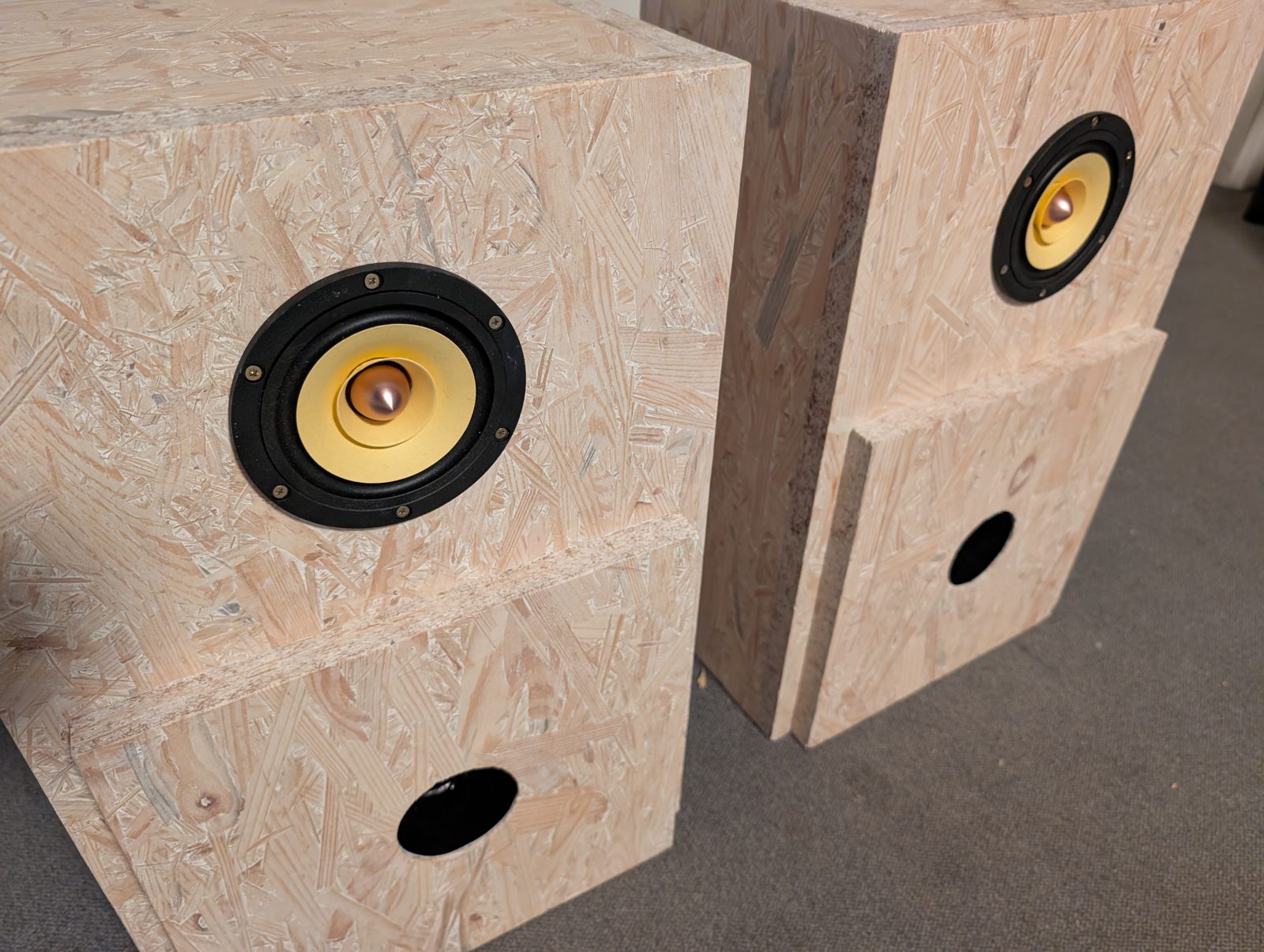
The finished pair in oriented strand board01DIY storeOriented strand boardOne 2000 × 1000 mm board, 22 mm, for the pair.
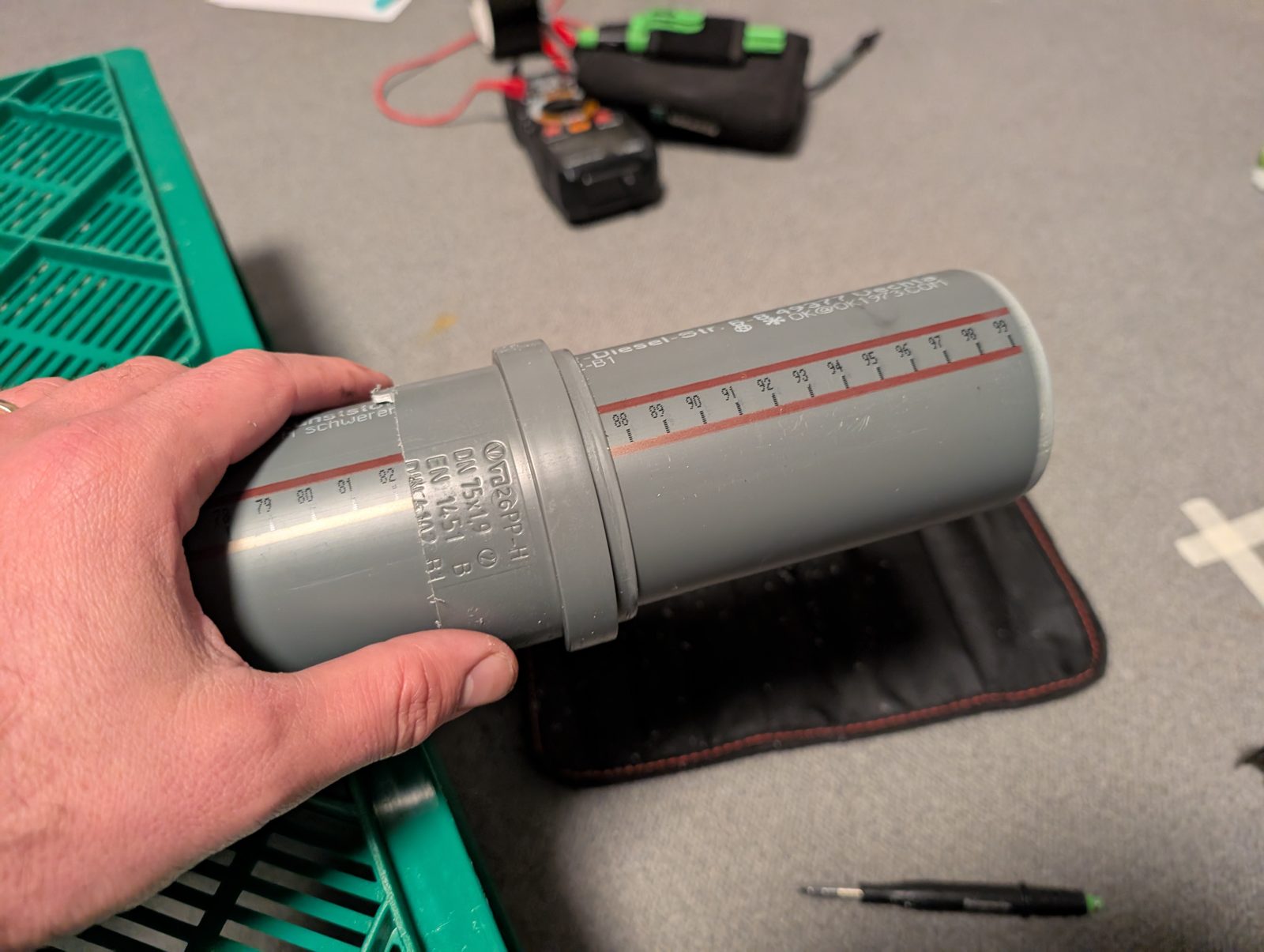
The HT DN75 drain pipe used as the port tube02Plumbing aisleHT DN75 drain pipe175 mm total port, tunes the box to ≈ 48 Hz.
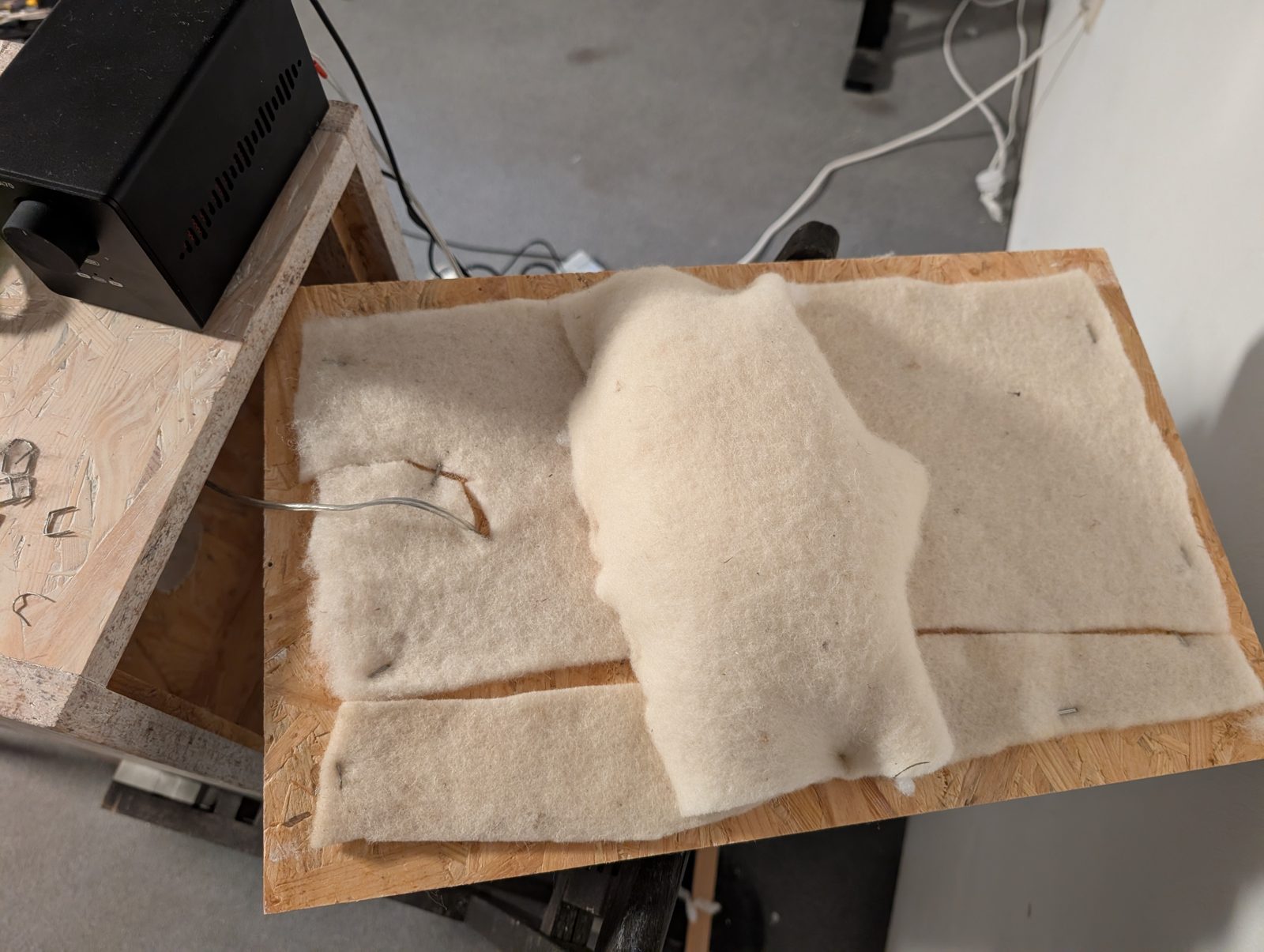
Sheep's wool garden fleece and the fill pocket on the back panel03Garden centreSheep's wool fleeceSold as a mulch mat; one sheet per speaker.
Way of workinghow it was tuned
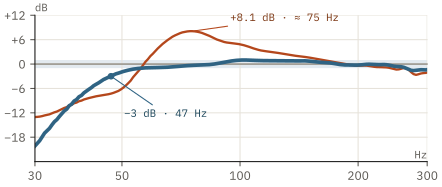
FIG 1 · Bass, driver + port, room-free, left speaker
Bass before and after: the untreated box has a +8.1 dB hump at about 75 Hz; the finished speaker is flat within ±1 dB from 55 to 150 Hz, −3 dB at 47 Hz

— Untreated— Finished

Port tuning Fb74.4 Hz≈ 48 Hz

Bass hump at ~75 Hz+8.1 dBgone

Box resonance, 350 Hz+13 dB−6.3 dB

“Not a huge bass addition, but the speaker sounds more balanced in some way.”

Listening note after step 2, the port tube. Measurement makes it verifiable, the ears make it final.

NextThe two treble peaks at ~6 and ~10.5 kHz remain; a correction EQ is the next step.

Box530 × 340 × 254 mm outside, 27.0 l inside, removable back

DriverAiyima 4″ full-range, 8 Ω version

Jointsbiscuits (size 20) and wood glue, no screws

Dampingone fleece layer + a 50 g fill pocket, all on the back panel

LE PETIT, PAIRQTY

OSB 22 mm, 2000 × 10001

Aiyima 4″ driver, 8 Ω2

HT DN75 drain pipe1

Biscuits, size 2060

M4 inserts + screws32

+ fleece, fill, gasket, beech cleats

QR code linking to rich1704.github.io/le-petit-on-a-budget

Build it14 steps, three plan sheets, the cutting plan, and every measurement as CSV.rich1704.github.io/le-petit-on-a-budget

rich1704 · Documentation CC BY-SA 4.0 · Le Petit designed by Jean Hiraga, L'Audiophile no. 29, 1983Also: 02 · Le Petit Sub →